What CVE-2026-84280 Discloses
CVE-2026-84280 is a stored cross-site scripting vulnerability in Fancy Product Designer for WordPress, affecting all versions up to and including 6.5.2. The plugin fails to sanitize and escape the elements[].title value taken from stored shortcode order data, and no account is required to plant a payload: an unauthenticated attacker can inject arbitrary web scripts that persist and execute whenever a user opens an injected page. The disclosure specifies where execution lands — the stored payload is written to the DOM through innerHTML inside the beforeElementAdd JavaScript event handler, so scripts run specifically when an administrator reviews shortcode orders in the WordPress admin panel. Version 6.5.3 fixes the vulnerability.
Why Admin-Session XSS Deserves Urgency
Where a stored payload detonates matters as much as whether it runs. This flaw executes inside the WordPress admin panel, in the browser session of a site administrator — the highest-value context a stored XSS payload can reach. Scripts running in an administrator's session can drive privileged actions through the very interface the victim is using. The injection itself demands no credentials; an attacker only needs the ability to submit order data that the vulnerable code path stores and later renders. Unauthenticated injection paired with administrator-side execution is exactly what earns this disclosure a high severity rating, and it is why stopping the payload at the request layer matters.
BitFire WAF Blocks the Malicious Script Payload
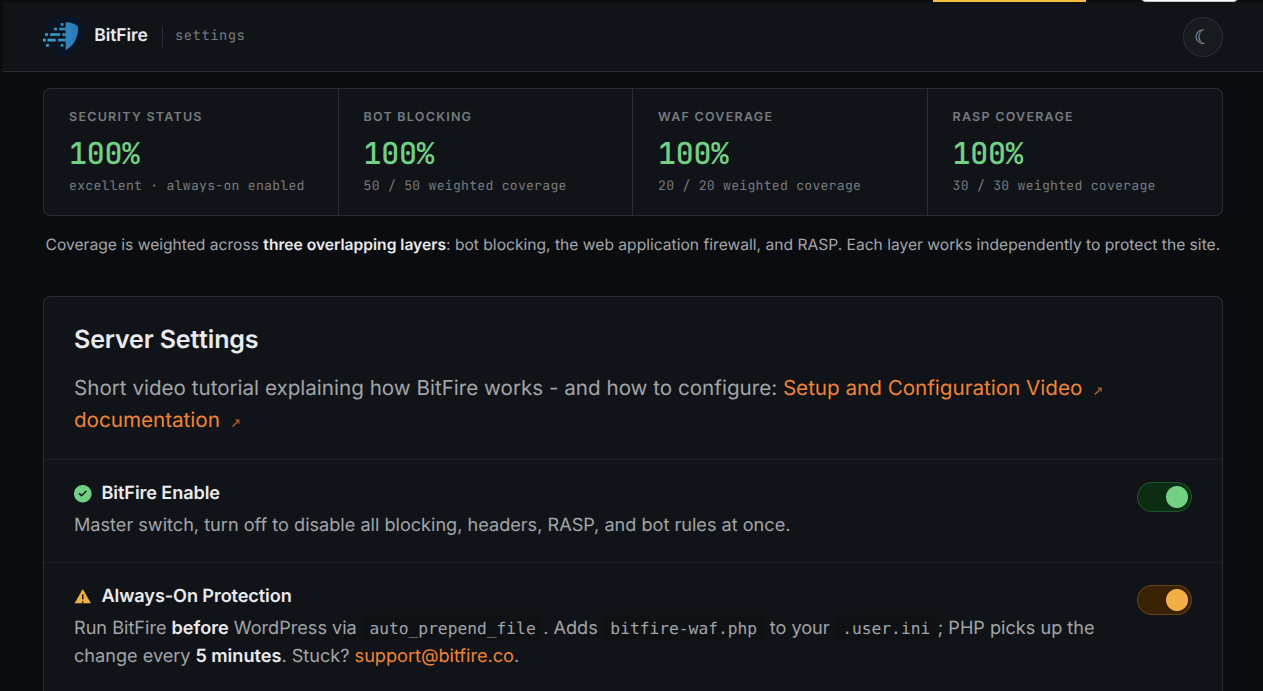
The BitFire Web Application Firewall in BitFire FREE inspects request data — URLs, query strings, form fields, POST bodies, and cookies — before WordPress or any plugin processes it. Its cross-site scripting detection is built for precisely this attack step: identifying malicious JavaScript injection carried in submitted values. The elements[].title payload that CVE-2026-84280 depends on is just such a payload, arriving in request data that vulnerable code would otherwise store verbatim. BitFire blocks matching script-injection attempts at the request layer, so the payload never reaches the shortcode order storage that turns it into a persistent threat. This is direct prevention, available in BitFire FREE for eligible non-commercial websites.
If Your Site Was Affected, Investigate for Persistence.
Update Fancy Product Designer to version 6.5.3 or later immediately — the vendor identifies 6.5.3 as the fixed release. But patching only closes the injection path; it does not scrub payloads attackers stored beforehand, and stored XSS survives inside order data until it is found and removed. Review stored shortcode order content for unexpected script tags and encoded script fragments, and delete any injected entries. Then run BitFire Threat Hunter, which investigates for the hallmarks of an exploited site: backdoor administrator accounts, hidden database triggers, suspicious database content, long-running PHP processes, and droppers that can reinfect a site. Assume exposure if an affected version ever ran on your site, rotate relevant credentials, and never treat an absence of obvious malicious files as proof the site is clean.
Conclusion: Block the Payload, Patch, Then Verify
CVE-2026-84280 turns unauthenticated order data into scripts that execute in administrator sessions, and it demands a response on both fronts. Install BitFire and put its WAF in front of the script-injection payloads this class of attack depends on — protection that blocks injection attempts the moment they arrive, not after an administrator becomes the victim. Then update to 6.5.3, audit stored order data for planted payloads, and run Threat Hunter if there is any chance your site was exploited before now. Prevention plus investigation is the only complete answer to stored XSS. Secure your site with BitFire today.