What the CVE Entry Establishes
The supplied disclosure describes a limited code injection vulnerability in Advanced Custom Fields: Extended PRO through version 0.9.2.6. The vulnerable operation is `render_field`, where insufficient validation of form configuration parameters occurs before those parameters are merged into field settings and passed to `call_user_func_array()`. The stated result is that unauthenticated attackers can call arbitrary WordPress functions with controlled arguments. This is not the same as proven arbitrary PHP execution, and the brief does not identify an endpoint, HTTP method, payload format, CVSS score, patch implementation, or fixed version. The two stated reachability paths are conditional and should not be conflated.
Why This Is Conditional but Still Serious
Method 1 depends on an administrator enabling the non-default `shortcode_preview` setting for the target form. Method 2 depends on the server environment lacking OpenSSL functions, which causes ACF Pro's `acf_decrypt` to fall back to unverified base64 decoding. Those preconditions narrow exposure, but they do not make an affected site safe once present. Arbitrary WordPress-function invocation with controlled arguments can become dangerous when the selected function attempts a privileged operation. Because the brief does not establish a SQL injection, XSS, malicious upload, traversal, SSRF, SSI, or XXE payload, this article does not claim WAF payload matching blocks the flaw.
BitFire PRO RASP Contains Protected Runtime Outcomes
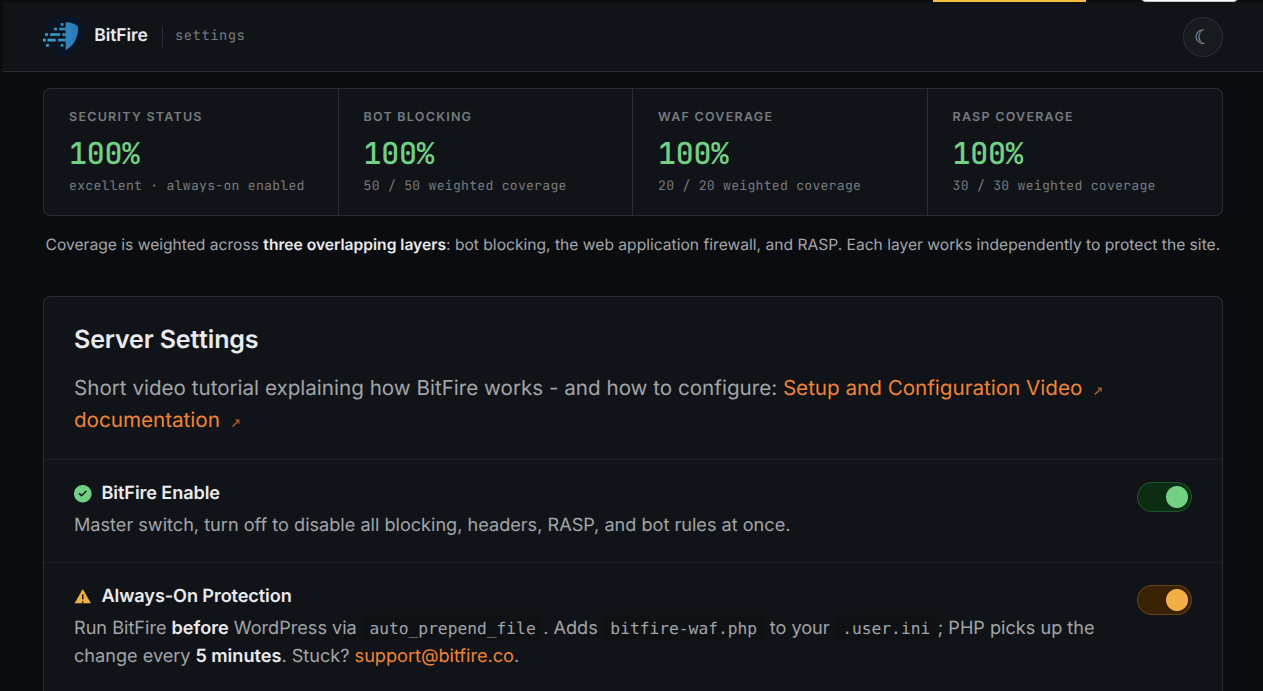
BitFire PRO RASP enforces authorization when WordPress and PHP attempt protected operations after request processing begins. For this function-invocation flaw, the important distinction is that RASP does not claim to block `call_user_func_array()` itself or suppress every possible WordPress function. Instead, it blocks covered consequences. If an invoked function attempts to create or modify PHP, install a plugin payload, create a backdoor administrator, promote a user to administrator, change protected database content, set administrator authentication cookies, impersonate an administrator, or contact known malicious command-and-control infrastructure, BitFire PRO RASP denies that unauthorized result at runtime.
If Your Site Was Affected, Investigate for Persistence.
Administrators should update Advanced Custom Fields: Extended PRO to a release the vendor identifies as fixed as soon as one is available or already published. Patching closes the known vulnerable path, but it does not prove the site was clean before the update. Sites that ran version 0.9.2.6 or earlier with either disclosed precondition should investigate for compromise, remove discovered persistence, and rotate relevant credentials. BitFire Threat Hunter is built for this work: it looks for backdoor administrator accounts, hidden database triggers, WordPress and server cron persistence, long-running PHP processes, must-use plugin abuse, suspicious database content, and droppers that can reinfect the site.
Limit Impact Now and Patch Immediately
CVE-2026-xxxxx should be treated as a serious conditional exposure, not as a generic claim of universal remote code execution. The precise request mechanics remain unspecified, so the strongest supported BitFire protection is runtime containment. Enable BitFire PRO RASP to block unauthorized takeover and persistence outcomes if attacker-controlled WordPress-function invocation reaches execution. Then patch to the vendor-fixed release, review whether either precondition existed on your site, and use Threat Hunter when prior exposure is possible.