What the CVE Entry Establishes
The supplied disclosure describes CVE-2026-83627 as an unauthenticated hook injection flaw in The Post Grid and Gutenberg Blocks – ComboBlocks for WordPress. Affected versions are 2.2.85 through 2.3.22. The named vulnerable area is several functions in `~/includes/blocks/form-wrap/function.php`. The stated result is that unauthenticated attackers can execute actions with WordPress hooks, granted no other security controls are present in the function. That is serious because WordPress hooks can be connected to privileged plugin, theme, or core behaviors, but the brief does not establish arbitrary PHP execution, a file upload path, an endpoint, a request method, or a specific hook name. Those unknowns should remain unknown until the vendor or researchers publish more detail.
Why Hook Injection Requires Runtime Containment
Hook injection is different from a classic SQL injection, cross-site scripting payload, malicious upload, traversal attempt, SSRF, SSI, XXE, or PHP object deserialization attack. The provided description identifies attacker-triggered WordPress hook actions, not a recognizable malicious payload class that a request WAF rule can be claimed to match. It also does not specify a form submission, AJAX route, REST endpoint, or POST workflow, so this article does not claim Bot Protection directly blocks this CVE. The strongest supported BitFire control is outcome containment: stopping the high-value operations an attacker tries to cause after WordPress begins processing the request.
BitFire PRO RASP Blocks Protected Consequences
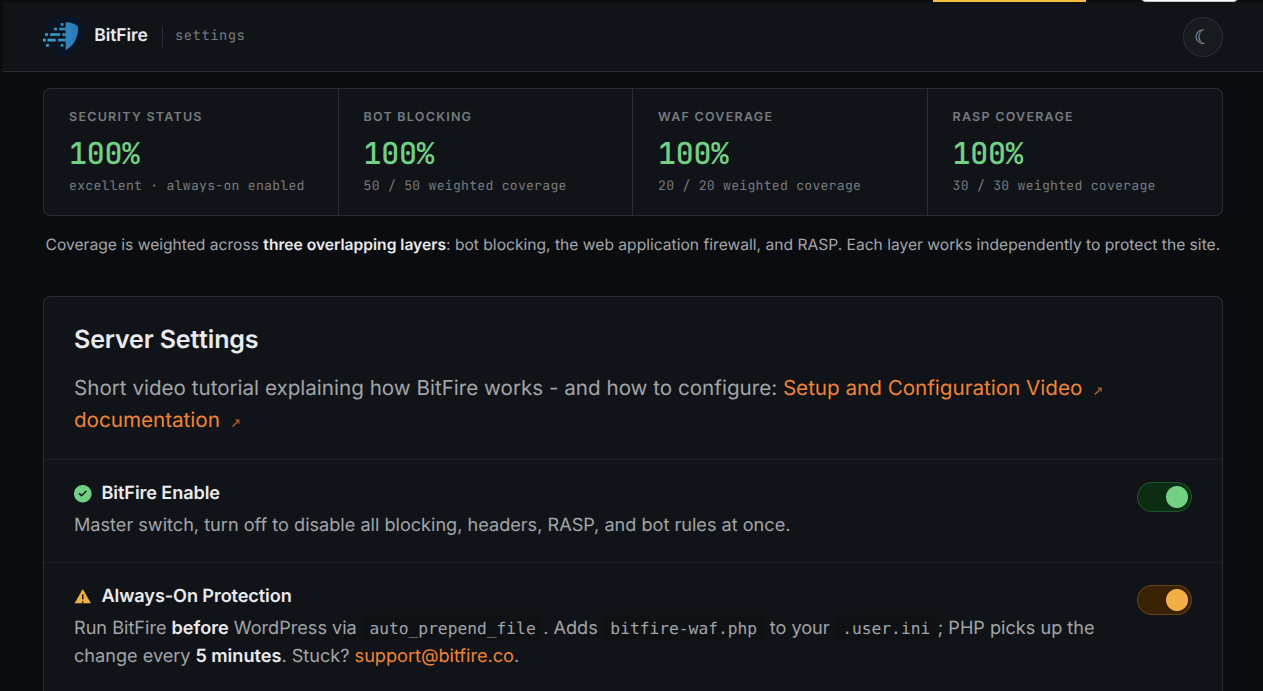
BitFire PRO RASP enforces authorization at runtime when WordPress and PHP attempt protected operations. For CVE-2026-83627, that distinction matters. RASP does not claim to suppress every WordPress hook or prevent every possible hook side effect. Instead, it blocks covered outcomes. If an injected hook path attempts to create or modify PHP, write a web shell, install a plugin payload, create a backdoor administrator, promote a user to administrator, alter protected database content, set administrator authentication cookies, impersonate an administrator, or connect to known malicious command-and-control infrastructure, BitFire PRO RASP denies the unauthorized result before it becomes persistent compromise.
Patch ComboBlocks and Reduce Exposure
Administrators running ComboBlocks versions 2.2.85 through 2.3.22 should update immediately to a release the vendor identifies as fixed. The brief does not provide a fixed version, so do not guess one from unrelated changelog entries. Until the site is updated, minimize exposure by disabling unused vulnerable functionality when operationally possible, reviewing plugin configuration, and restricting unnecessary public interaction paths. Patching is still mandatory: RASP contains protected consequences, but it does not repair the plugin logic or prove that an attacker never reached the vulnerable hook path before the update.
If Your Site Was Affected, Investigate for Persistence.
A critical unauthenticated vulnerability deserves post-exposure investigation even after patching. Administrators should examine affected sites for compromise, remove discovered persistence, and rotate relevant credentials. BitFire Threat Hunter is built for this work: it looks for backdoor WordPress administrator accounts, hidden database triggers, WordPress and server cron persistence, must-use plugin abuse, suspicious database content, long-running PHP processes, and droppers that can reinfect the site. Do not treat the absence of an obvious malicious file as proof that the site is clean. Hook-triggered actions can leave changes in accounts, scheduled tasks, database content, or startup chains.
Deploy Runtime Protection Now
CVE-2026-83627 is critical because it gives unauthenticated attackers a path to execute WordPress hook actions in vulnerable ComboBlocks versions. The disclosed mechanics support a precise protection message: enable BitFire PRO RASP to block unauthorized takeover and persistence outcomes if hook injection reaches runtime. Then patch to the vendor-fixed ComboBlocks release and use Threat Hunter when prior exposure is possible. BitFire gives WordPress teams decisive containment without pretending runtime protection is a substitute for fixing the vulnerable plugin.